






Posted By: Dr. (Prof.) Kunal Bahrani on 12 Aug 2026
A headache that keeps coming back. A hand that has started trembling. Episodes of dizziness that make you uncomfortable walking alone. A seizure that nobody in the family expected. Memory lapses that seem to be happening more often.
Neurological symptoms can be worrying because they involve some of the most important functions of the human body. The brain, spinal cord and nerves influence movement, sensation, speech, memory, balance, coordination and many of the functions we often take for granted.
And sometimes, the symptoms are not dramatic at all.
A person may simply feel that something has changed.
Perhaps the headaches are different from before. Perhaps there is a strange tingling sensation in the feet. Perhaps a parent is forgetting conversations that happened only a few hours earlier. Perhaps someone has started walking differently or experiencing unexplained episodes of confusion.
These are the situations in which people often begin looking for a neurologist.
But choosing a neurologist should not simply be about finding the doctor who appears first on Google or the profile that uses the words “best neurologist” most frequently.
A better question is:
Does the neurologist have the training, experience and clinical expertise that are relevant to my particular problem?
That question becomes especially important because neurology is a broad specialty. The doctor who spends much of their practice treating migraine may have a different area of expertise from someone who primarily manages movement disorders, epilepsy or stroke.
For patients in Faridabad, understanding what to look for can make the process of finding the right specialist considerably easier.
What Does a Neurologist Actually Do?
A neurologist is a specialist who evaluates and manages disorders affecting the nervous system.
This includes the:
- Brain
- Spinal cord
- Peripheral nerves
- Muscles and neuromuscular system
Neurological problems can therefore look very different from one another.
A neurologist may see a patient because of recurrent migraine, while the next patient may have epilepsy, Parkinson’s disease, neuropathy, a movement disorder or symptoms following a stroke.
Some patients come because they have a diagnosis already.
Others come because nobody has yet been able to explain what is happening.
That distinction is important.
A neurologist’s job is not simply to identify a disease and prescribe a medicine. Much of neurology involves working through the history of the symptoms, examining the nervous system and deciding what information is needed to reach or confirm a diagnosis.
Sometimes that means ordering an MRI or CT scan.
Sometimes an EEG or nerve conduction study is appropriate.
Sometimes blood tests are useful.
And sometimes the most valuable diagnostic tool is a careful conversation followed by a detailed neurological examination.
Not every patient needs every investigation.
When Should You See a Neurologist?
There is no single symptom that means everyone needs to see a neurologist.
However, certain symptoms deserve medical evaluation, particularly when they are persistent, unexplained, worsening or interfering with everyday life.
These can include:
- Recurrent or severe headaches
- Migraine attacks that are becoming more frequent
- Episodes of loss of consciousness or awareness
- Seizures
- Persistent dizziness or vertigo
- Tremors
- Numbness or tingling
- Persistent nerve pain
- Muscle weakness
- Problems with balance
- Difficulty walking
- Repeated unexplained falls
- Changes in memory
- Changes in speech
- Unexplained changes in movement
- Symptoms following a stroke
- Problems that have not improved despite treatment
The nature of the symptom matters as much as the symptom itself.
For example, occasional forgetfulness is common. But progressive memory problems that begin affecting finances, medication management, familiar routines or communication deserve proper evaluation.
Likewise, occasional dizziness can have many causes. Dizziness accompanied by weakness, speech difficulty, double vision or severe imbalance requires a very different level of attention.
Not Every Headache Is a Migraine
Headache is probably one of the most common reasons people eventually consult a neurologist.
But “headache” is a symptom, not a diagnosis.
Migraine is one possibility, but headaches can occur for many different reasons.
A neurologist may consider:
- Migraine
- Tension-type headache
- Cluster headache
- Medication-overuse headache
- Headache associated with another medical condition
- Secondary headaches requiring further investigation
The pattern matters.
Where is the pain?
How long does it last?
How frequently does it happen?
Is there nausea?
Does light or sound make it worse?
Are there visual symptoms?
Does physical activity aggravate it?
Has the character of the headache changed?
These questions can provide much more useful information than simply describing the pain as “severe.”
When a Headache Needs Urgent Attention
Most headaches are not caused by a life-threatening condition.
But certain patterns should not be ignored.
A sudden, extremely severe headache—particularly one that reaches maximum intensity very quickly—needs urgent medical assessment.
Similarly, a new headache accompanied by neurological symptoms such as weakness, difficulty speaking, confusion, seizures or significant visual changes requires prompt evaluation.
The same applies when a headache occurs in an unusual context, such as after significant head trauma or alongside serious systemic symptoms.
The point is not to frighten people who experience headaches.
It is to recognise that the pattern of a headache matters.
Migraine Is More Than a Headache
People who have never experienced migraine sometimes imagine it as simply a bad headache.
For someone living with frequent migraine, the reality can be very different.
An attack may involve throbbing or pulsating head pain, nausea, vomiting and increased sensitivity to light or sound. Some people experience an aura involving visual or sensory symptoms before or during an attack.
Repeated attacks can begin affecting work, family life, sleep and social activities.
Treatment therefore needs to look beyond what happens during an individual attack.
A neurologist may consider both acute treatment and prevention depending on the frequency and severity of attacks.
This is an area in which Dr. Kunal Bahrani has a particular clinical interest. His current professional profiles list headache and migraine among his areas of expertise, and he has undertaken fellowship training in interventional headache medicine.
That does not mean every patient with a headache needs specialist treatment.
It means that patients with recurrent, disabling or difficult-to-control headaches can benefit from an assessment that looks carefully at the diagnosis and the treatment strategy.
A Tremor Does Not Automatically Mean Parkinson’s Disease
Another common reason for neurological consultation is tremor.
A person notices that their hand is shaking and immediately becomes concerned about Parkinson’s disease.
But tremor has many possible causes.
Essential tremor, medication effects, anxiety, metabolic problems and several neurological conditions can produce tremor.
Parkinson’s disease has a broader clinical picture that may include slowness of movement, stiffness, changes in walking and other movement-related symptoms.
This is why diagnosis should not be based on one symptom alone.
A neurologist looks at the pattern of the tremor, when it occurs, what makes it better or worse and whether other neurological signs are present.
Dr. Bahrani’s listed clinical interests include Parkinson’s disease and movement disorders.
For someone who has recently developed a persistent tremor, the useful first step is not to search for a Parkinson’s treatment online.
It is to find out what is actually causing the tremor.
Dizziness and Vertigo Can Be Difficult to Understand
“Dizziness” can mean different things to different people.
Some people mean that the room is spinning.
Others describe feeling faint, unsteady or as though they are walking on an unstable surface.
The distinction matters.
Vertigo can be related to the vestibular system of the inner ear, but neurological causes also exist.
A neurologist may therefore become involved when dizziness is persistent, unexplained or accompanied by other neurological symptoms.
Dr. Bahrani’s current profile includes vertigo and balance disorders among his clinical interests.
Sudden dizziness combined with difficulty speaking, facial weakness, limb weakness, severe imbalance or other sudden neurological symptoms should be treated as an emergency rather than waiting for a routine consultation.
Memory Loss: When Is It More Than Normal Forgetfulness?
Everyone forgets things.
A name may temporarily escape you. You may walk into a room and forget why you went there. You may occasionally misplace your phone or keys.
These experiences alone do not indicate dementia.
The concern is different when memory problems become persistent and begin interfering with normal life.
A family member may notice that someone:
- Repeats the same questions
- Forgets recent conversations
- Gets confused about familiar routines
- Struggles with previously familiar tasks
- Has difficulty managing money
- Gets lost in familiar surroundings
- Experiences significant changes in behaviour or personality
There are many possible causes of memory problems, and not all of them are dementia.
Sleep disorders, depression, medications, metabolic conditions and other health problems can affect memory and concentration.
A neurological assessment can help determine what needs further investigation.
Dementia is among Dr. Bahrani’s listed areas of clinical interest.
What About Numbness and Tingling?
A “pins and needles” sensation that lasts for a few minutes after sitting awkwardly is usually very different from persistent numbness or burning in the feet.
When abnormal sensations continue or progressively spread, they may indicate an issue involving peripheral nerves or another part of the nervous system.
Patients may describe:
- Burning
- Tingling
- Numbness
- Electric-shock-like sensations
- Reduced sensation
- Sensitivity to touch
- Weakness
Diabetes is one common cause of neuropathy, but it is not the only one.
A neurological evaluation can help determine whether the symptoms are consistent with neuropathy and whether additional investigations are necessary.
Neuropathies are among the conditions listed in Dr. Bahrani’s current clinical profile.
Stroke: When Every Minute Matters
Stroke deserves a separate discussion because it is fundamentally different from many other neurological conditions.
A stroke occurs when blood flow to part of the brain is interrupted or when bleeding occurs within the brain.
The symptoms often appear suddenly.
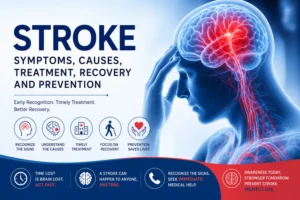
Think about the word FAST:
F – Face: Is one side of the face drooping?
A – Arm: Is there sudden weakness or numbness in one arm?
S – Speech: Is speech suddenly unclear or difficult to understand?
T – Time: Do not wait. Seek emergency medical care.
Other symptoms can include sudden visual disturbance, severe imbalance, confusion or a sudden severe headache.
A person experiencing these symptoms should not wait for a routine appointment with a neurologist.
They need urgent medical evaluation.
Dr. Bahrani’s professional profile lists stroke and acute stroke thrombolysis among his areas of expertise. His previous leadership roles in Faridabad have also included stroke-focused neurological services and neurocritical care.
Epilepsy Is Not Just About Convulsions
When people hear the word epilepsy, many immediately picture someone having a generalized convulsive seizure.
But seizures can present in different ways.
Some may involve loss of awareness.
Some may cause unusual movements.
Others can be brief episodes of staring, confusion or altered behaviour.
A single seizure does not automatically mean that a person has epilepsy.
The diagnosis requires careful assessment of the circumstances surrounding the episode and, when appropriate, investigations such as EEG or brain imaging.
Dr. Bahrani lists epilepsy among his areas of clinical interest.
For families dealing with a first unexplained seizure, the goal of a neurological consultation is not merely to start medication.
It is to understand what happened and determine what it means.
What Should You Look for in a Neurologist?
This is perhaps the most useful question to ask when searching for a neurologist.
The answer is not simply “the doctor with the most reviews.”
Reviews can tell you something about the patient experience, but they cannot tell you everything about a doctor’s specialist training or suitability for a particular neurological condition.
Here are some factors worth considering.
- Specialist Training
Neurology is a specialist medical discipline.
Look at the doctor’s postgraduate training and whether they have completed formal specialist training in neurology.
For example, Dr. Kunal Bahrani completed his DM in Neurology from AIIMS, New Delhi, after MBBS and MD in General Medicine from the Institute of Medical Sciences, Banaras Hindu University. His current professional profile also lists MRCP (UK), FEBN, FIHN and FRCP qualifications.
These qualifications provide useful context when evaluating his professional background.
- Experience Relevant to Your Problem
Years of experience are useful, but the type of experience matters too.
Someone looking for migraine care may want to know about a neurologist’s experience in headache medicine.
Someone with Parkinson’s disease may want a doctor who regularly manages movement disorders.
Someone who has experienced a stroke may need access to a team experienced in acute stroke and subsequent neurological care.
Dr. Bahrani’s current profile lists a broad range of neurological interests, including headache and migraine, epilepsy, Parkinson’s disease, stroke, neuropathy, multiple sclerosis, vertigo, dementia and movement disorders.
- A Doctor Who Is Willing to Diagnose Before Treating
This sounds obvious, but it is important.
When symptoms are vague, the temptation can be to treat the most obvious possibility immediately.
Neurology often requires a little more patience.
The doctor may need to understand the chronology of symptoms, previous medical history, medications, family history and findings on examination before deciding what treatment is appropriate.
Sometimes the correct answer is that no scan is needed.
Sometimes a scan is essential.
Sometimes the problem requires referral to another specialist.
Good medical care is not about ordering the maximum number of tests.
It is about ordering the right tests for the clinical question.
- Access to Appropriate Infrastructure
A neurologist’s clinical judgement remains central, but infrastructure becomes particularly important when neurological problems are complex.
Depending on the condition, patients may require access to:
- MRI
- CT
- EEG
- Nerve conduction studies
- Neurocritical care
- Stroke services
- Rehabilitation
- Other specialised neurological investigations
Dr. Bahrani currently practises at Yatharth Hospital’s Sector 20 and Sector 88 facilities in Faridabad. Yatharth lists him as Chairman & Group Director – Neurology.
- The Ability to Explain the Diagnosis
Neurological terminology can be difficult for patients and families.
Terms such as neuropathy, seizure disorder, movement disorder, demyelinating disease or neurodegeneration can sound intimidating.
A consultation should leave the patient with a reasonable understanding of:
- What the doctor thinks is happening
- Why they think that
- Whether additional tests are necessary
- What treatment options exist
- What the next step should be
Patients should feel comfortable asking questions.
- Continuity of Care
Some neurological conditions require long-term management.
Migraine may need preventive treatment.
Epilepsy often requires ongoing medication and follow-up.
Parkinson’s disease changes over time.
Stroke survivors may require continuing prevention and rehabilitation.
Dementia affects not only the patient but also the family.
For these conditions, the relationship between patient and neurologist can extend well beyond the first consultation.
Why Dr. Kunal Bahrani’s Background Is Relevant
There is a difference between making a promotional claim about a doctor and simply explaining the doctor’s professional background.
Dr. Kunal Bahrani currently serves as Chairman & Group Director – Neurology at Yatharth Hospital in Faridabad. His listed qualifications include MBBS, MD, DM (AIIMS), MRCP (UK), FEBN, FIHN and FRCP from London and Glasgow.
He completed his specialist neurology training at AIIMS, New Delhi.
His professional career has also included senior neurology positions at hospitals and institutions in Faridabad and the surrounding region, including Asian Institute of Medical Sciences, Fortis Hospital, Marengo Asia Hospitals and ESIC Medical College, according to his current professional profile.
That experience is relevant for patients because it means his practice encompasses both common neurological complaints and more complex neurological disorders.
His current clinical interests include:
- Headache and migraine
- Epilepsy
- Stroke
- Parkinson’s disease
- Movement disorders
- Dementia
- Neuropathy
- Multiple sclerosis
- Vertigo and balance disorders
- Neuro-modulation and TMS
- Botox treatment for migraine
These are not all conditions that require the same type of treatment. That breadth is one reason it is useful to look at a neurologist’s actual areas of practice rather than relying on a generic label.
The Growing Role of Headache Medicine
Headache medicine deserves particular attention because recurrent headaches are frequently self-managed for years.
Someone may take a painkiller whenever the headache appears and gradually find that the episodes are becoming more frequent.
Another person may have learned to live around migraine attacks, cancelling plans or avoiding certain activities because they expect another episode.
A proper headache assessment can look at:
- Frequency of attacks
- Duration
- Symptoms associated with the headache
- Medication use
- Potential triggers
- Sleep
- Stress
- Menstrual or hormonal associations where relevant
- Previous treatment
- Warning signs requiring investigation
For some patients, the treatment goal is not simply to make the next headache disappear.
It is to reduce how often headaches occur in the first place.
Dr. Bahrani has specific fellowship training in interventional headache medicine, and headache and migraine are listed among his areas of clinical interest.
Modern Neurology Is Not Limited to Medicines
Neurological treatment has changed considerably over the years.
Medication remains central to the management of many neurological diseases, but selected patients may benefit from procedures, rehabilitation or neuromodulation.
One example is Transcranial Magnetic Stimulation (TMS).
TMS uses magnetic pulses to stimulate specific areas of the brain. Its use depends on the clinical indication, and it should not be presented as a universal treatment for every neurological condition.
Yatharth Hospital has a Brain Stimulation Centre at its Sector 20 Faridabad facility, and Dr. Bahrani’s profile lists neuro-modulation and TMS among his areas of interest.
The broader lesson is that modern neurological care increasingly involves choosing from several therapeutic approaches rather than assuming that every patient needs the same medicine.
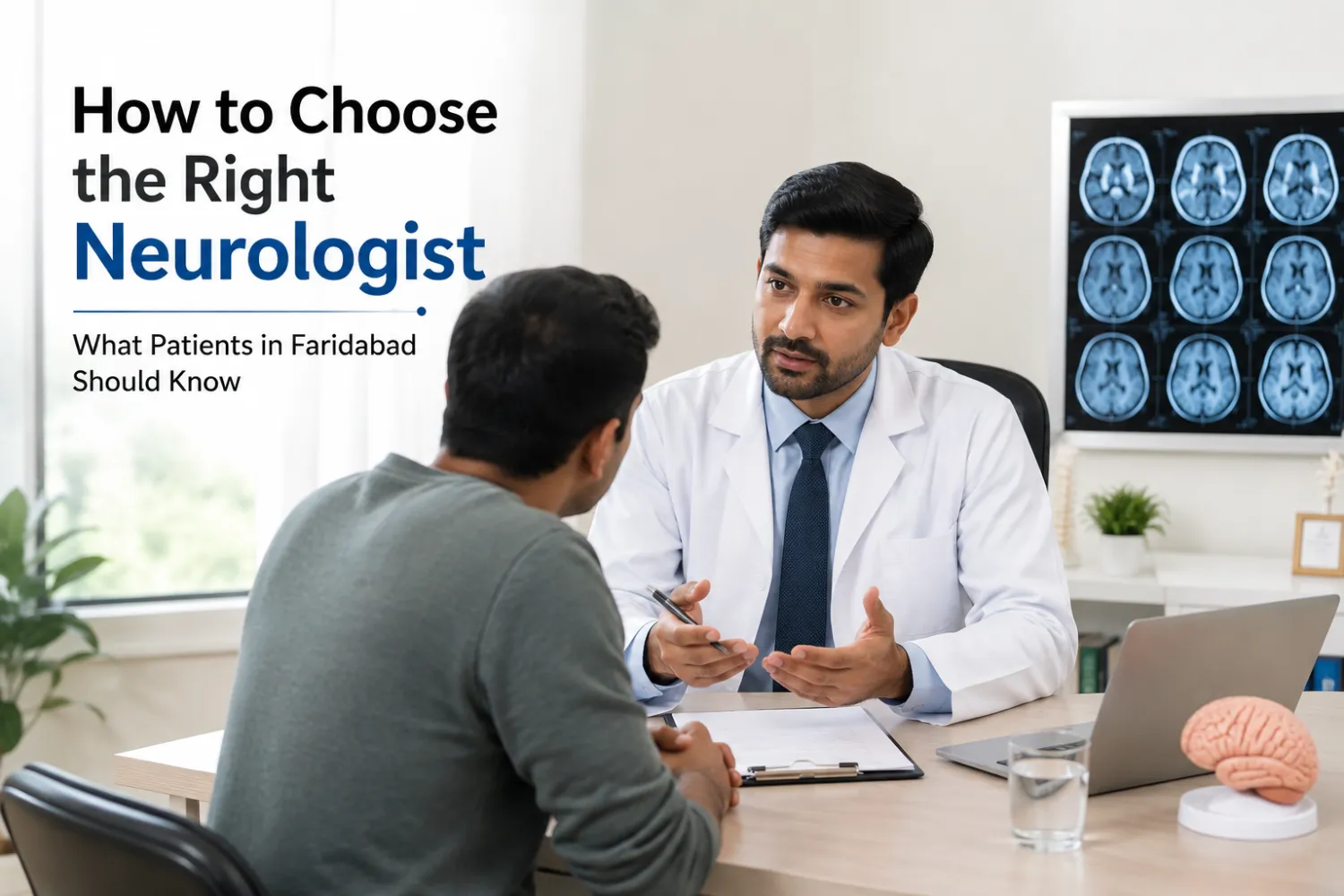
What a First Neurology Consultation May Look Like
Many patients feel anxious before seeing a neurologist because they do not know what will happen.
A first consultation generally begins with a detailed history.
The doctor may ask:
- When did the symptoms start?
- Did they begin suddenly or gradually?
- How often do they occur?
- How long does each episode last?
- Has the pattern changed?
- What makes the symptoms better or worse?
- Are there other symptoms?
- What medications are you taking?
- Have you had similar symptoms before?
- Is there a relevant family history?
A neurological examination may then assess different aspects of nervous system function.
Depending on the findings, the neurologist may recommend investigations—or may decide that investigations are not immediately necessary.
Patients should not assume that a consultation has been incomplete simply because an MRI was not prescribed.
Sometimes the clinical history and examination provide sufficient information to begin treatment.
What Should You Bring to Your Neurology Appointment?
A little preparation can make a consultation more useful.
If possible, bring:
- Previous medical reports
- MRI or CT reports and images
- Previous prescriptions
- A list of current medications
- Blood test reports relevant to your condition
- Details of previous neurological consultations
For headache patients, keeping a record of headache frequency and duration can be particularly useful.
For patients with unusual episodes or seizures, family members who witnessed the event can provide valuable information.
A short video of an episode, when safely recorded and appropriate, can sometimes also help the doctor understand what occurred.
Don’t Choose a Neurologist Only Because of a Search Ranking
Online searches can be useful.
They can help you discover doctors, compare qualifications and understand the services available near you.
But search rankings are not medical qualifications.
A doctor appearing first in a search result does not automatically mean that doctor is the right specialist for your condition.
Similarly, a large number of reviews does not tell the whole story.
When evaluating a neurologist, look beyond the headline.
Check the training.
Look at the areas of expertise.
Understand the doctor’s current role.
Consider the hospital infrastructure.
And most importantly, think about whether the doctor’s expertise matches the problem you are trying to solve.
Why Local Access Can Matter
For many patients, seeing a neurologist is not a one-time event.
A patient with chronic migraine may need follow-up.
Someone with epilepsy may require medication review.
Parkinson’s disease requires ongoing management.
Patients recovering from stroke may need continued neurological and rehabilitation support.
Having access to a neurologist in the same city can therefore make continuing care easier.
Dr. Bahrani currently sees patients at Yatharth Hospital’s Sector 20 and Sector 88 facilities in Faridabad.
For patients living in Faridabad and surrounding areas, this provides a local option for specialist neurological consultation.
A Final Word for Patients Searching for a Neurologist
The internet has made it easier to find doctors.
It has also made it easier to become overwhelmed by claims.
“Best.”
“Top.”
“Leading.”
“Number one.”
These words may appear frequently when searching for a specialist, but they do not tell you enough on their own.
A more useful approach is to look underneath those labels.
What is the doctor’s specialist qualification?
Where did they train?
What neurological conditions do they regularly manage?
Do they have experience relevant to your problem?
Can they explain their reasoning clearly?
Is appropriate diagnostic and treatment infrastructure available?
Can you continue follow-up when needed?
For patients in Faridabad considering a neurologist, these questions provide a much more meaningful way to make a decision.
Dr. Kunal Bahrani’s background includes specialist training in neurology at AIIMS, international professional qualifications, senior neurological leadership roles and clinical interests spanning headache, migraine, epilepsy, stroke, Parkinson’s disease, movement disorders, dementia, neuropathy, multiple sclerosis and vertigo. He currently serves as Chairman & Group Director – Neurology at Yatharth Hospital, Faridabad.
Ultimately, the right neurologist is not necessarily the person with the most impressive description online.
It is the specialist whose training and experience make sense for your medical problem, and with whom you can build a relationship based on clear communication and appropriate care.
Frequently Asked Questions
How do I choose the best neurology doctor in Faridabad?
Look at specialist training, experience with your particular condition, areas of clinical expertise, hospital infrastructure, communication and continuity of care. Search rankings and online reviews can be useful starting points but should not be the only factors.
Who is Dr. Kunal Bahrani?
Dr. Kunal Bahrani is a neurologist and currently serves as Chairman & Group Director – Neurology at Yatharth Hospital, Faridabad. He holds MBBS, MD, DM (AIIMS), MRCP (UK), FEBN, FIHN and FRCP qualifications.
Where did Dr. Kunal Bahrani complete his neurology training?
He completed his DM in Neurology at AIIMS, New Delhi, following MBBS and MD in General Medicine from the Institute of Medical Sciences, Banaras Hindu University.
What neurological conditions does Dr. Kunal Bahrani treat?
His current professional profile lists headache and migraine, epilepsy, Parkinson’s disease, movement disorders, stroke, dementia, neuropathy, multiple sclerosis, vertigo and balance disorders, among other neurological conditions.
Does every headache require a neurologist?
No. Many headaches can be managed by a primary-care doctor. However, recurrent, disabling, changing or unusual headaches may require specialist assessment, particularly when accompanied by neurological symptoms.
When is a headache an emergency?
A sudden, extremely severe headache, particularly one reaching maximum intensity very quickly, or a headache accompanied by weakness, speech difficulty, confusion, seizures, significant visual symptoms or other acute neurological changes requires urgent medical evaluation.
When should I see a neurologist for dizziness?
Consider neurological assessment when dizziness or vertigo is persistent, unexplained, recurrent or accompanied by neurological symptoms such as weakness, speech difficulty, double vision, severe imbalance or numbness.
Does every tremor mean Parkinson’s disease?
No. Tremor has many possible causes. A neurologist can distinguish Parkinsonian tremor from essential tremor and other causes by considering the pattern of the tremor and the presence of other neurological signs.
Can memory loss be treated?
The answer depends on the cause. Memory problems can result from several conditions, some of which may be treatable. A proper assessment is important before assuming that memory loss is due to dementia.
What happens during a neurological consultation?
The consultation generally involves a detailed medical history and neurological examination. Depending on the symptoms and findings, the doctor may recommend investigations such as imaging, EEG, nerve conduction studies or blood tests.
Does a neurologist always prescribe an MRI?
No. Imaging is recommended when the clinical situation warrants it. The decision depends on the symptoms, examination findings, medical history and suspected diagnosis.
About Dr. Kunal Bahrani
Dr. Kunal Bahrani, MBBS, MD, DM (AIIMS), MRCP (UK), FEBN, FIHN, FRCP (Glasgow, London), is Chairman & Group Director – Neurology at Yatharth Hospital, Faridabad.
His professional interests include headache and migraine, epilepsy, stroke, Parkinson’s disease, movement disorders, dementia, neuropathy, multiple sclerosis, vertigo and balance disorders, as well as selected neuromodulation therapies. He has held senior neurological positions at several institutions in Faridabad and the wider Delhi-NCR region.