






Posted By: Dr. (Prof.) Kunal Bahrani on 09 Aug 2026
When something feels wrong with the brain, nerves or movement of the body, finding the right specialist can make a significant difference. Symptoms such as persistent headaches, repeated dizziness, seizures, numbness, tremors, memory problems, weakness or difficulty walking may have many different causes. In such situations, a consultation with an experienced neuro doctor in Faridabad can help identify the underlying problem and guide appropriate treatment.
Neurology is a broad medical speciality that deals with disorders affecting the brain, spinal cord, nerves and muscles. Some neurological conditions are temporary and manageable, while others require long-term monitoring and treatment.
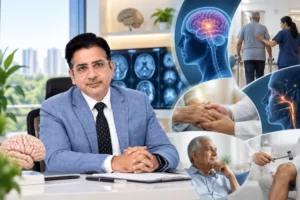
Dr. (Prof.) Kunal Bahrani is a neurologist in Faridabad with more than 15 years of experience in neurology. He has completed his DM in Neurology from AIIMS New Delhi and holds international qualifications including MRCP (UK), FEBN and FRCP from London and Glasgow. He currently serves as Chairman & Group Director – Neurology at Yatharth Hospital, Sector 20, Faridabad.
What Does a Neuro Doctor Do?
A neuro doctor, commonly called a neurologist, diagnoses and manages conditions involving the nervous system.
The nervous system includes:
- Brain
- Spinal cord
- Peripheral nerves
- Muscles
- Structures responsible for movement, sensation, coordination and balance
A neurologist may evaluate symptoms that appear unrelated at first. For example, repeated falls could be associated with a movement disorder, balance problem, neuropathy or another neurological condition. Similarly, recurring headaches may represent migraine, tension-type headache or, in some cases, require evaluation for another underlying cause.
The purpose of a neurological consultation is therefore not simply to treat a symptom. It is to understand why the symptom is occurring.
When Should You Consult a Neuro Doctor in Faridabad?
You may benefit from a neurological evaluation if you experience persistent, recurrent or unexplained symptoms such as:
- Frequent or severe headaches
- Migraine attacks
- Seizures or unusual episodes of unconsciousness
- Tremors or involuntary movements
- Numbness or tingling
- Weakness in an arm or leg
- Difficulty walking or maintaining balance
- Repeated dizziness or vertigo
- Memory problems
- Changes in speech
- Difficulty swallowing
- Persistent neck or back pain associated with weakness or numbness
- Sleep-related neurological symptoms
- Facial pain or abnormal facial movements
- Symptoms following a stroke
- Progressive problems with coordination or movement
Not every headache, episode of dizziness or instance of forgetfulness indicates a serious neurological disease. However, persistent or unexplained symptoms deserve proper assessment rather than repeated self-medication.
Neurological Conditions Treated by Dr. Kunal Bahrani
Dr. Kunal Bahrani provides neurological care for a broad range of conditions. His listed areas of expertise include stroke, epilepsy, headache and migraine disorders, Parkinson’s disease, dementia, neuropathy, multiple sclerosis, myasthenia gravis, muscle disorders, sleep disorders, neuro-otology, neuro-ophthalmology and spine-related neurological problems.
- Stroke and Paralysis
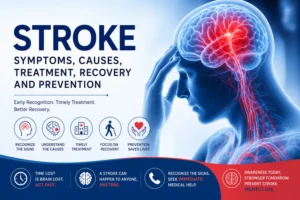
Stroke occurs when blood supply to part of the brain is interrupted or when bleeding occurs within the brain.
Sudden weakness or numbness, especially on one side of the body, difficulty speaking, facial drooping, loss of balance or sudden changes in vision can be warning signs.
Stroke is a medical emergency. Treatment should not be delayed while trying home remedies or waiting for symptoms to disappear.
Neurological care may include acute assessment, appropriate emergency treatment, prevention of another stroke and rehabilitation planning.
- Epilepsy and Seizure Disorders
A seizure is caused by abnormal electrical activity in the brain. A single seizure does not automatically mean that a person has epilepsy, which is why proper evaluation is important.
Neurological assessment may consider:
- What happened before, during and after the episode
- The patient’s medical history
- Medication history
- Possible triggers
- EEG or other investigations when clinically indicated
- Brain imaging where appropriate
Treatment depends on the type and cause of seizures and may involve anti-seizure medication, lifestyle advice and regular follow-up.
- Migraine and Headache Disorders
Headache is one of the most common reasons people seek neurological advice.
Migraine can cause more than just head pain. Some people experience nausea, vomiting, sensitivity to light or sound, visual symptoms or difficulty functioning during an attack.
Dr. Kunal Bahrani has a particular professional focus on headache medicine and is listed as an Interventional Headache Fellow (FIHN). His practice includes evaluation and treatment of migraine and other headache disorders.
The right treatment depends on the type, frequency and severity of headache. For some patients, treatment involves managing acute attacks. For others with frequent or disabling headaches, preventive treatment may be considered.
- Parkinson’s Disease and Tremors
Parkinson’s disease is a progressive neurological disorder that can affect movement as well as several non-motor functions.
Possible symptoms include:
- Tremor
- Slowness of movement
- Muscle stiffness
- Changes in walking
- Reduced balance
- Changes in handwriting
- Reduced facial expression
- Sleep disturbances
- Changes in mood or thinking
Not every tremor is Parkinson’s disease. Essential tremor, medication-related tremor and other neurological conditions can produce similar symptoms.
A neurologist can distinguish between these possibilities through clinical examination and appropriate investigations.
- Dementia and Memory Problems
Occasional forgetfulness is common, but persistent memory problems that interfere with daily life should not simply be dismissed as ageing.
A neurological evaluation can help determine whether memory changes are related to dementia or another potentially treatable cause.
Assessment may involve reviewing:
- Memory and thinking abilities
- Daily functioning
- Medication history
- Sleep
- Mood
- Other medical conditions
- Neurological examination
- Relevant laboratory or imaging tests
Early evaluation can help patients and families understand what is happening and plan appropriate care.
- Neuropathy and Nerve Disorders
Neuropathy refers to damage or dysfunction of one or more nerves.
Patients may describe symptoms such as:
- Burning pain
- Tingling
- Pins-and-needles sensation
- Numbness
- Electric-shock-like pain
- Weakness
- Reduced sensation in the feet or hands
Diabetes is a common cause, but nerve symptoms can have several possible causes, including nutritional deficiencies, certain medications, autoimmune conditions and other disorders.
Treatment depends on identifying the underlying cause rather than simply suppressing the pain.
- Vertigo and Dizziness
Dizziness can mean different things to different people. Some describe a spinning sensation, while others experience light-headedness, imbalance or a feeling of being unsteady.
Neurological evaluation can be useful when dizziness is:
- Recurrent
- Associated with imbalance
- Accompanied by neurological symptoms
- Difficult to explain
- Affecting everyday activities
Conditions involving the vestibular system, migraine or the nervous system may contribute to certain forms of dizziness and vertigo.
- Multiple Sclerosis
Multiple sclerosis is a neurological disease in which the immune system attacks the central nervous system.
Symptoms can vary considerably between patients and may include:
- Visual problems
- Weakness
- Numbness
- Balance difficulties
- Muscle stiffness
- Fatigue
- Coordination problems
Because symptoms can overlap with many other conditions, diagnosis requires careful clinical assessment and appropriate investigations.
- Myasthenia Gravis and Muscle-Related Neurological Conditions
Myasthenia gravis affects communication between nerves and muscles and can cause fluctuating muscle weakness.
Symptoms may include:
- Drooping eyelids
- Double vision
- Difficulty swallowing
- Difficulty speaking
- Weakness that becomes more noticeable with activity
Other neuromuscular disorders can also cause weakness, cramps, abnormal sensations or difficulty with movement.
A neurologist can determine whether symptoms originate from the brain, spinal cord, nerves, neuromuscular junction or muscles.
What Happens During a Neurology Consultation?
A neurological consultation is not necessarily about ordering multiple tests.
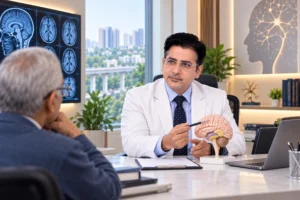
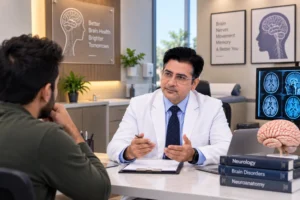
The first and most important step is usually a detailed discussion of the symptoms.
The doctor may ask:
- When did the symptoms begin?
- Did they develop suddenly or gradually?
- How often do they occur?
- What makes them better or worse?
- Are there associated symptoms?
- Are there previous neurological problems?
- What medicines are currently being taken?
- Is there a relevant family history?
This is followed by a neurological examination.
Depending on the findings, the doctor may recommend investigations such as blood tests, MRI, CT, EEG, nerve conduction studies or other tests.
Importantly, not every patient needs every test. Investigations should be selected according to the symptoms and clinical findings.
Why Choosing the Right Neurologist Matters
Neurological symptoms can be complex because several conditions can produce similar complaints.
For example:
Tremor does not always mean Parkinson’s disease.
Headache does not always mean migraine.
Dizziness does not always originate from the ear.
Numbness does not always mean neuropathy.
A detailed neurological assessment helps narrow down the possibilities and avoid treating the wrong condition.
For this reason, when searching for a neuro doctor in Faridabad, patients should look beyond generic labels and consider the doctor’s qualifications, clinical experience, areas of expertise and approach to diagnosis.
Why Consider Dr. Kunal Bahrani for Neurological Care in Faridabad?
Dr. Kunal Bahrani’s professional profile combines specialist neurological training with extensive clinical experience.
His qualifications include:
- MBBS
- MD in General Medicine
- DM in Neurology from AIIMS New Delhi
- Interventional Headache Fellowship (FIHN)
- MRCP (UK)
- Fellow of the European Board of Neurology (FEBN)
- FRCP (London)
- FRCP (Glasgow)
He is currently Chairman & Group Director – Neurology at Yatharth Hospital, Sector 20, Faridabad. His professional profile also lists memberships and affiliations with organisations including the Indian Academy of Neurology, American Academy of Neurology, Association of British Neurologists and Movement Disorder Society.
His practice covers both common neurological complaints and more complex neurological disorders, including stroke, epilepsy, migraine, Parkinson’s disease, dementia, neuropathy and multiple sclerosis.
A Patient-Centred Approach to Neurology
Neurological problems can be stressful not only for patients but also for their families.
A person experiencing repeated seizures may worry about what will happen next. Someone with a new tremor may immediately fear Parkinson’s disease. A family noticing memory changes in an elderly parent may be unsure whether the problem is normal ageing or something more significant.
Good neurological care starts by listening carefully.
The goal is to understand the patient’s symptoms, establish the most likely diagnosis, explain the condition in understandable language and develop a treatment plan suited to the individual.
Where Can You Consult Dr. Kunal Bahrani in Faridabad?
Dr. Kunal Bahrani is available for neurological consultation at locations in Faridabad, including Yatharth Hospital and Mediclub Clinic. His official website currently lists consultation facilities at Yatharth Hospital, Sector 20; Yatharth Hospital, Sector 88; and Mediclub Clinic, Sector 21C. Patients should confirm current timings and appointment availability before visiting.
Frequently Asked Questions About Neuro Doctors in Faridabad
Who is a neuro doctor?
A neuro doctor, or neurologist, is a medical specialist who diagnoses and treats disorders affecting the brain, spinal cord, nerves and muscles.
When should I see a neuro doctor in Faridabad?
You should consider a neurological consultation for persistent or unexplained headaches, seizures, tremors, numbness, weakness, memory problems, dizziness, balance difficulties, movement problems or other symptoms involving the nervous system.
Is a neurologist the same as a neurosurgeon?
No. A neurologist primarily diagnoses and medically manages neurological disorders. A neurosurgeon performs surgical procedures involving the brain, spine or nervous system when surgery is required.
Some patients may initially need a neurologist to establish the diagnosis and determine whether surgical evaluation is necessary.
What conditions does Dr. Kunal Bahrani treat?
Dr. Kunal Bahrani provides care for conditions including stroke, epilepsy, migraine and headache disorders, Parkinson’s disease, dementia, neuropathy, multiple sclerosis, myasthenia gravis, muscle disorders and several other neurological conditions.
Does every neurological problem require an MRI?
No. An MRI is not automatically required for every neurological symptom. The need for imaging depends on the patient’s symptoms, examination findings and suspected diagnosis.
Can migraine be treated by a neurologist?
Yes. Neurologists commonly diagnose and manage migraine and other headache disorders. Treatment may include medication for acute attacks, preventive treatment and lifestyle or trigger-management strategies.
Is sudden weakness a reason to seek emergency care?
Yes. Sudden weakness or numbness, particularly on one side of the body, difficulty speaking, facial drooping, sudden vision problems or severe loss of balance can be signs of stroke. Emergency medical attention should be sought immediately.
What should I bring to my neurology appointment?
Bring previous medical records, scan reports, blood-test reports, prescriptions and a list of current medicines. If you are experiencing episodes such as seizures, dizziness or headaches, keeping a record of when they occur and what symptoms accompany them can also be useful.
Final Word
Finding the right neuro doctor in Faridabad is about more than choosing the first name that appears in a search result. Neurological symptoms can have multiple possible causes, and an accurate diagnosis is the foundation of appropriate treatment.
Dr. (Prof.) Kunal Bahrani brings specialist training from AIIMS New Delhi, international neurological qualifications and more than 15 years of experience to neurological care in Faridabad. His practice covers a wide range of neurological disorders, from migraine, epilepsy and neuropathy to stroke, Parkinson’s disease, dementia and other complex neurological conditions.
If you or a family member has persistent, recurrent or unexplained neurological symptoms, a timely consultation with a qualified neurologist can help clarify the cause and identify the appropriate next step.