






Posted By: Dr. (Prof.) Kunal Bahrani on 03 Aug 2026
It’s usually 11 pm on a Tuesday. Someone’s father has gone quiet mid-sentence, or their hand won’t stop trembling, or the headache that started that afternoon hasn’t let up for six hours and something about it feels different this time. That’s when “best neurologist in Faridabad” gets typed into a phone, half in panic, half hoping the internet has a straightforward answer.
It doesn’t, really. The search results mix paid listings, directory pages nobody’s updated since 2019, and a scatter of star ratings that say more about how someone’s parking experience went than about the doctor’s actual skill. So here’s a more useful way to think about it — not a ranked list, but the same process a lot of doctors themselves use when a relative needs a referral.
Start With the Symptom, Not the Search Bar
Neurology covers an unusually wide range of problems, and the urgency changes everything about how you should be searching. A few starting points:
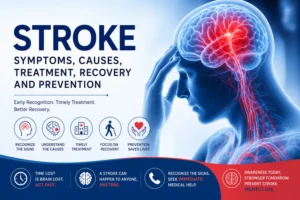
- Sudden weakness on one side, slurred speech, or a drooping face — this is a possible stroke. Don’t search at all; go to the nearest hospital with a stroke unit. Clot-dissolving treatment works best within a narrow window, often just a few hours.
- Recurring or worsening headaches, especially with vision changes or nausea — worth a scheduled consultation, not an emergency visit, unless it’s the worst headache of your life.
- A tremor, stiffness, or slowness that’s crept in over months — this points toward a movement disorder specialist rather than a general physician.
- A seizure, even a single one — needs proper neurological evaluation before it happens again.
- Persistent tingling, numbness, or muscle weakness — could be nerve-related and benefits from someone who regularly reads nerve conduction studies.
Knowing which bucket you’re in changes the question from “who’s the best neurologist in Faridabad” to “who’s the right neurologist for this,” which is a much easier thing to answer.
Credentials Worth Actually Checking
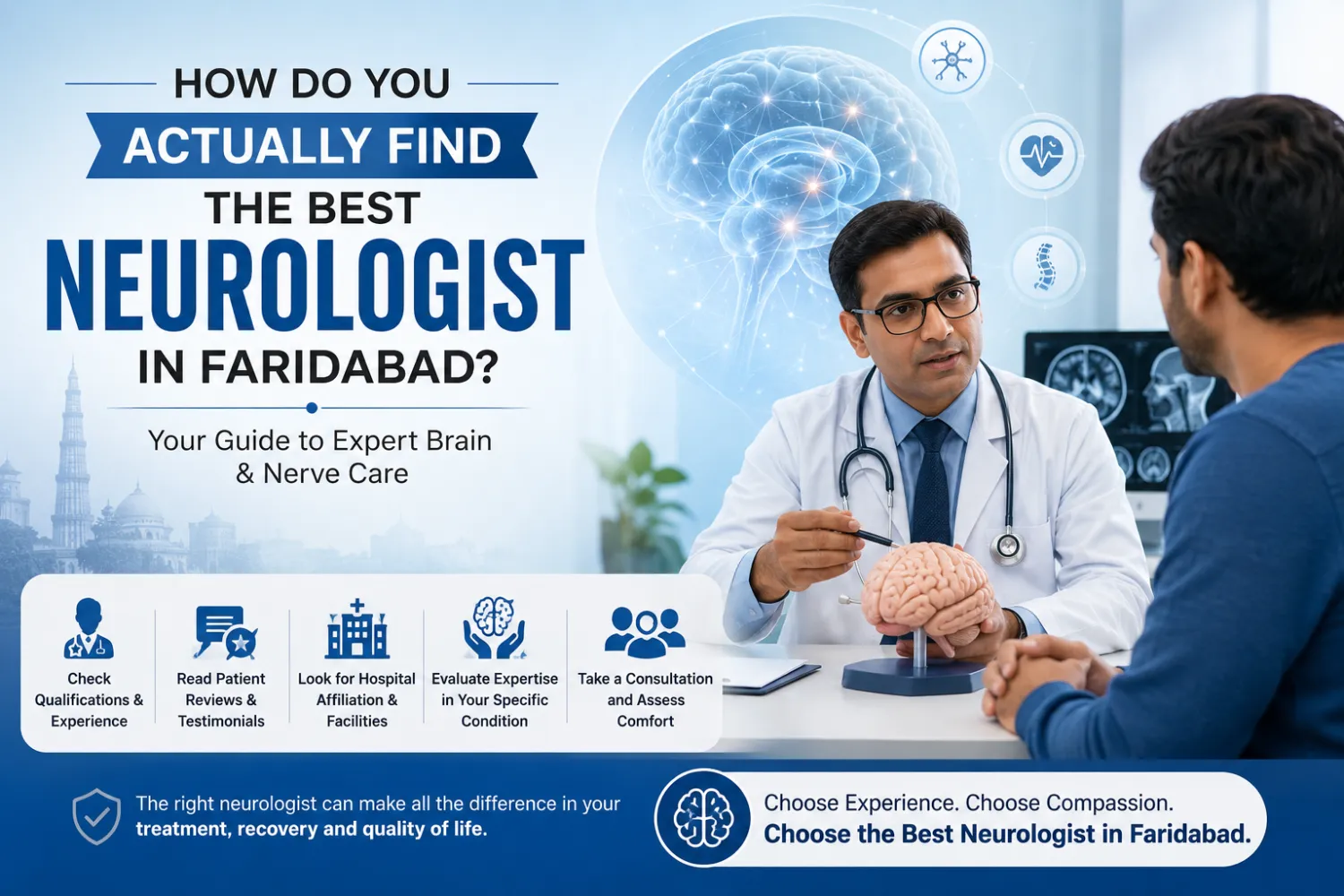
Most people stop at “MD” or “specialist” without knowing what separates a strong neurology background from an average one. A few things worth two minutes of checking before you book:
- DM in Neurology — this is the actual neurology super-specialization in India, earned after MD, typically at institutes like AIIMS, PGI Chandigarh, or NIMHANS. It’s a different (and longer) training path than a general MD alone.
- Where they trained, not just where they practice now — a DM from a high-volume government teaching hospital usually means they’ve handled a much larger and more varied caseload during training.
- International fellowships or board exams (UK’s MRCP, European Board of Neurology, and similar) — not mandatory for good care, but they signal someone who’s kept training past the minimum.
- Hospital privileges for emergencies — some neurologists only see scheduled OPD patients and don’t handle stroke calls. If your concern is acute, ask directly whether the doctor manages emergency stroke cases at that hospital.
- Sub-focus — epilepsy, movement disorders, stroke, and headache medicine are different worlds within neurology. Ask what they see most of.
Questions Worth Asking Before the First Visit
A short phone call to the hospital desk or clinic can save a wasted trip:
- “Does Dr. [Name] handle emergency stroke cases here, or only outpatient consultations?”
- “How soon can I get an appointment, and is there a faster route if this is urgent?”
- “Does the hospital have an in-house MRI and EEG, or will I be sent elsewhere for tests?”
- “How many years has the doctor been practicing independently, not just training?”
What This Looks Like in Faridabad
Faridabad’s neurology care has changed a lot in the last five years — hospitals like Yatharth, Fortis, Marengo Asia, and Asian Institute of Medical Sciences have all built out dedicated neurology units with in-house imaging and stroke protocols, which wasn’t the case even a decade ago when a lot of serious cases were routed straight to Delhi.
One name that consistently comes up when this checklist is applied is Dr. (Prof.) Kunal Bahrani, Chairman & Group Director of Neurology at Yatharth Hospital, Sector 20. He trained through DM Neurology at AIIMS New Delhi, holds the MRCP-SCE Neurology qualification from the UK and a Fellowship of the European Board of Neurology, and has led neurology departments at three other major Faridabad hospitals before this role — which, going by the criteria above, is exactly the kind of track record worth checking for. He covers the full range from acute stroke to epilepsy, movement disorders, and headache medicine, which matters if you’re not yet sure which sub-specialty your case falls under.
That’s not a reason to skip the checking process — it’s an example of what the checking process, done properly, tends to surface.
The Short Version
If there’s one thing to remember: urgency decides your first move. For anything that looks like a stroke, go straight to the nearest hospital with a stroke unit — don’t spend time comparing doctors. For everything else, a DM in Neurology, a clear sub-specialty match to your symptom, and a hospital with in-house imaging will get you further than any star rating.
Frequently Asked Questions
How do I know if I need a neurologist or just a general physician?
If symptoms involve the brain, spine, or nerves directly — persistent headaches, seizures, tremors, numbness, memory changes, or sudden weakness — a neurologist is the right specialist. A general physician is a reasonable first stop for milder or unclear symptoms and can refer you onward.
What is the difference between an MD physician and a neurologist for headache or stroke care?
An MD is a general medicine qualification. A neurologist has completed additional specialized training (DM Neurology in India) focused specifically on brain, spine, and nerve conditions, including stroke and seizure management that general physicians aren’t trained to handle independently.
Is stroke treatment really time-sensitive?
Yes. Clot-dissolving treatment for ischemic stroke is generally most effective within the first few hours of symptom onset. Reaching a hospital with a stroke-ready neurology team quickly matters more than choosing a specific doctor.
What should I look for in the best neurologist in Faridabad?
A DM in Neurology (India’s neurology super-specialty), a sub-focus matching your symptoms, a hospital with in-house MRI/EEG, and — if your situation is urgent — confirmation that the doctor handles emergency cases rather than scheduled visits only.