





Advanced Transcranial Magnetic Stimulation (TMS) Therapy by Dr. Kunal Bahrani
Struggling with depression, OCD, chronic pain, or other neurological conditions despite medications? Transcranial Magnetic Stimulation (TMS) is an advanced, non-invasive, FDA-approved treatment that stimulates specific areas of the brain using magnetic pulses. It offers new hope for patients who have not responded adequately to medications or psychotherapy.
At our Neurology Centre in Faridabad, Dr. Kunal Bahrani, Chairman & Group Director – Neurology, provides expert evaluation and personalized TMS treatment plans for eligible patients. Our goal is to improve symptoms, enhance brain function, and help patients regain a better quality of life through evidence-based neurological care.
What is TMS Therapy?
Transcranial Magnetic Stimulation (TMS) is a non-invasive brain stimulation therapy that uses magnetic fields to stimulate targeted nerve cells in specific regions of the brain involved in mood regulation, cognition, and neurological function.
Unlike brain surgery or electroconvulsive therapy (ECT), TMS does not require anesthesia, hospitalization, or sedation. Patients remain awake throughout the procedure and can resume normal activities immediately after each session.
We r using Advance Brainstimulation therapy /Neuromodulation therapy – rTMS & tDCS at Yatharth.
Do contact me in case of :
- Stroke Rehabilitation
- Parkinson’s
- Dementia
- Disorders of Consciousness
- Migraines
- Fibromyalgia
- Trigeminal Neuralgia
- Depression & Anxiety Disorders
- PTSD
- OCD
- Autism/ADHD
- Spinal Cord Injury
TMS is widely used worldwide and has become an important treatment option for patients with treatment-resistant depression and selected neurological conditions.
How Does TMS Therapy Work?
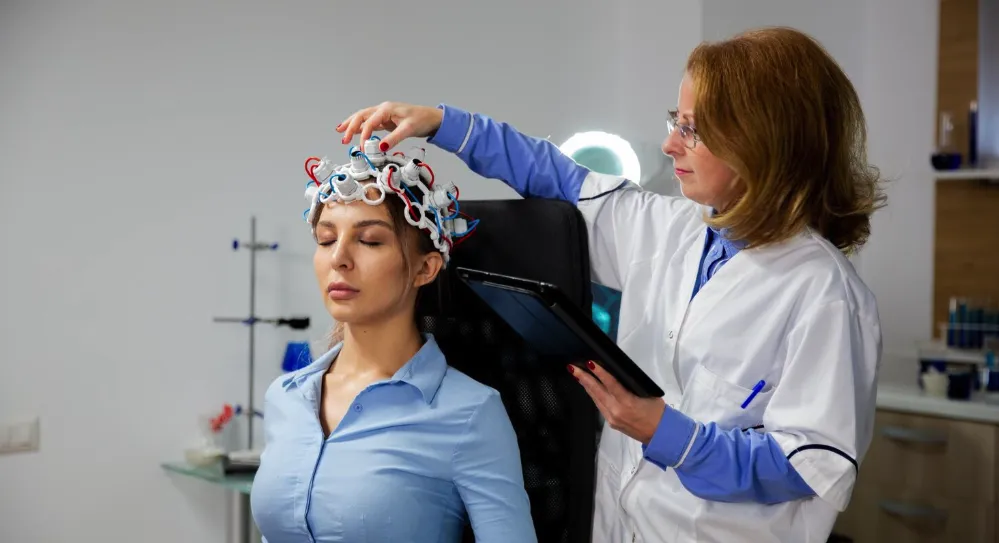
TMS uses a specialized magnetic coil placed gently against the scalp. The device delivers brief magnetic pulses that painlessly stimulate brain cells in targeted regions.
These magnetic pulses help:
- Improve communication between brain cells
- Restore normal brain activity in underactive areas
- Enhance neuroplasticity (the brain’s ability to reorganize itself)
- Improve mood regulation
- Reduce symptoms of depression and anxiety
- Support recovery in selected neurological disorders
Each session typically lasts 20–40 minutes, depending on the treatment protocol.
Conditions Treated with TMS Therapy
TMS has established and emerging applications across several neurological and psychiatric conditions. Based on individual evaluation, Dr. Kunal Bahrani may recommend TMS for appropriate patients.
Depression (Major Depressive Disorder)
TMS is FDA-approved for adults with depression who have not responded adequately to antidepressant medications.
Obsessive-Compulsive Disorder (OCD)
TMS may help reduce obsessive thoughts and compulsive behaviours in selected patients.
Migraine
Research suggests TMS may reduce the frequency and severity of migraines in certain patients.
Chronic Neuropathic Pain
TMS may help reduce chronic nerve-related pain when conventional treatments provide limited relief.
Stroke Rehabilitation
In carefully selected patients, TMS may support motor recovery and improve functional rehabilitation after a stroke.
Parkinson’s Disease
TMS is being explored as an adjunctive therapy to improve certain motor and non-motor symptoms in selected patients.
Anxiety Disorders
Some patients with anxiety disorders may benefit from TMS as part of a comprehensive treatment plan.
Note: Not every patient or condition is suitable for TMS. A detailed neurological assessment is essential before treatment.
Benefits of TMS Therapy
TMS offers several advantages over more invasive treatment options:
- Non-invasive treatment
- No surgery
- No anesthesia required
- No hospitalization
- Minimal recovery time
- Outpatient procedure
- Well tolerated by most patients
- No systemic medication side effects
- Can be combined with ongoing medications when appropriate
- Evidence-based treatment for treatment-resistant depression
Who is a Candidate for TMS Therapy?
You may be a suitable candidate if you:
- Have depression that has not improved with medications
- Cannot tolerate antidepressant side effects
- Have OCD that has not responded adequately to treatment
- Experience chronic neurological symptoms despite conventional therapies
- Are looking for a non-invasive treatment option
- Are medically suitable after neurological evaluation
Dr. Kunal Bahrani performs a detailed assessment to determine whether TMS is appropriate based on your diagnosis, medical history, and treatment goals.
What Happens During a TMS Session?
A typical TMS treatment session includes:
Initial Consultation
- Detailed neurological assessment
- Medical history review
- Review of previous treatments
- Eligibility assessment
- Personalized treatment planning
During the Procedure
- You remain awake and seated comfortably.
- A magnetic coil is positioned over a specific area of your scalp.
- Controlled magnetic pulses are delivered to targeted brain regions.
- You may hear clicking sounds and feel a tapping sensation on the scalp.
- Most patients tolerate the procedure well.
After Treatment
There is no recovery period. Patients can usually drive, work, or return to normal daily activities immediately after the session.
Is TMS Therapy Safe?
Yes. TMS is considered a safe and well-tolerated treatment when performed by trained specialists using approved protocols.
Some patients may experience temporary side effects, such as:
- Mild scalp discomfort
- Headache
- Tingling sensation at the treatment site
- Facial muscle twitching during stimulation
Serious complications are rare but will be discussed during your consultation.
Why Choose Dr. Kunal Bahrani for TMS Therapy in Faridabad?
Patients choose Dr. Kunal Bahrani because of his expertise in diagnosing and treating complex neurological disorders with evidence-based care.
Our approach includes:
- Comprehensive neurological evaluation
- Personalized treatment protocols
- Advanced TMS technology
- Evidence-based clinical practice
- Multidisciplinary neurological care
- Continuous monitoring of treatment response
- Patient-focused rehabilitation plans
Every treatment plan is tailored to the patient’s individual diagnosis, symptoms, and recovery goals.
Frequently Asked Questions (FAQs)
Is TMS painful?
No. Most patients describe the sensation as a gentle tapping on the scalp. The treatment is generally well tolerated.
How many TMS sessions are required?
Treatment typically involves 20–36 sessions over 4–6 weeks, although the exact schedule depends on the condition being treated and your response to therapy.
Can I continue taking my medications during TMS?
In many cases, yes. Your neurologist will advise whether any medication adjustments are necessary.
When will I start noticing improvement?
Some patients notice improvement within the first few weeks, while others may require completion of the full treatment course before experiencing significant benefits.
Are there any side effects?
The most common side effects are mild headaches or scalp discomfort, which usually improve after the first few sessions.
Who should not undergo TMS?
TMS may not be suitable for individuals with certain implanted metallic or electronic devices near the head (such as some aneurysm clips or cochlear implants) or a history of certain seizure disorders. A detailed evaluation is essential before treatment.
Book a TMS Consultation in Faridabad
If you or a loved one is living with depression, OCD, migraine, stroke-related disability, or another neurological condition and conventional treatments have not provided sufficient relief, TMS Therapy may be an appropriate option.
Consult Dr. Kunal Bahrani for a comprehensive neurological evaluation and personalized guidance on whether TMS is suitable for your condition.