






Posted By: Dr. (Prof.) Kunal Bahrani on 11 Aug 2026
Witnessing a seizure — whether it happens to a loved one or yourself — can be a frightening experience. Many people assume seizures only happen in people with epilepsy from childhood, but in reality, seizures can develop for the first time at any age, including well into adulthood. Understanding what causes seizures in adults is essential for proper diagnosis, treatment, and prevention of future episodes.
Dr. (Prof.) Kunal Bahrani, a leading neurologist in Faridabad, Delhi NCR, regularly evaluates adults experiencing new-onset seizures and helps identify the underlying cause so that appropriate, targeted treatment can begin.
What Exactly Is a Seizure?
A seizure occurs when there is a sudden, abnormal burst of electrical activity in the brain. This electrical disturbance can affect movement, sensation, awareness, or behavior, depending on which part of the brain is involved. Seizures can range from a brief lapse in attention to dramatic convulsions with loss of consciousness and body shaking.
It’s important to understand that a single seizure does not necessarily mean a person has epilepsy. Epilepsy is diagnosed when a person has two or more unprovoked seizures, or one seizure with a high likelihood of recurrence based on brain imaging or EEG findings.
Common Causes of Seizures in Adults
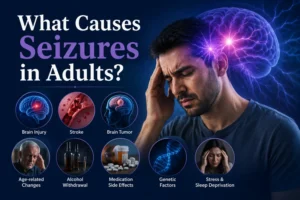
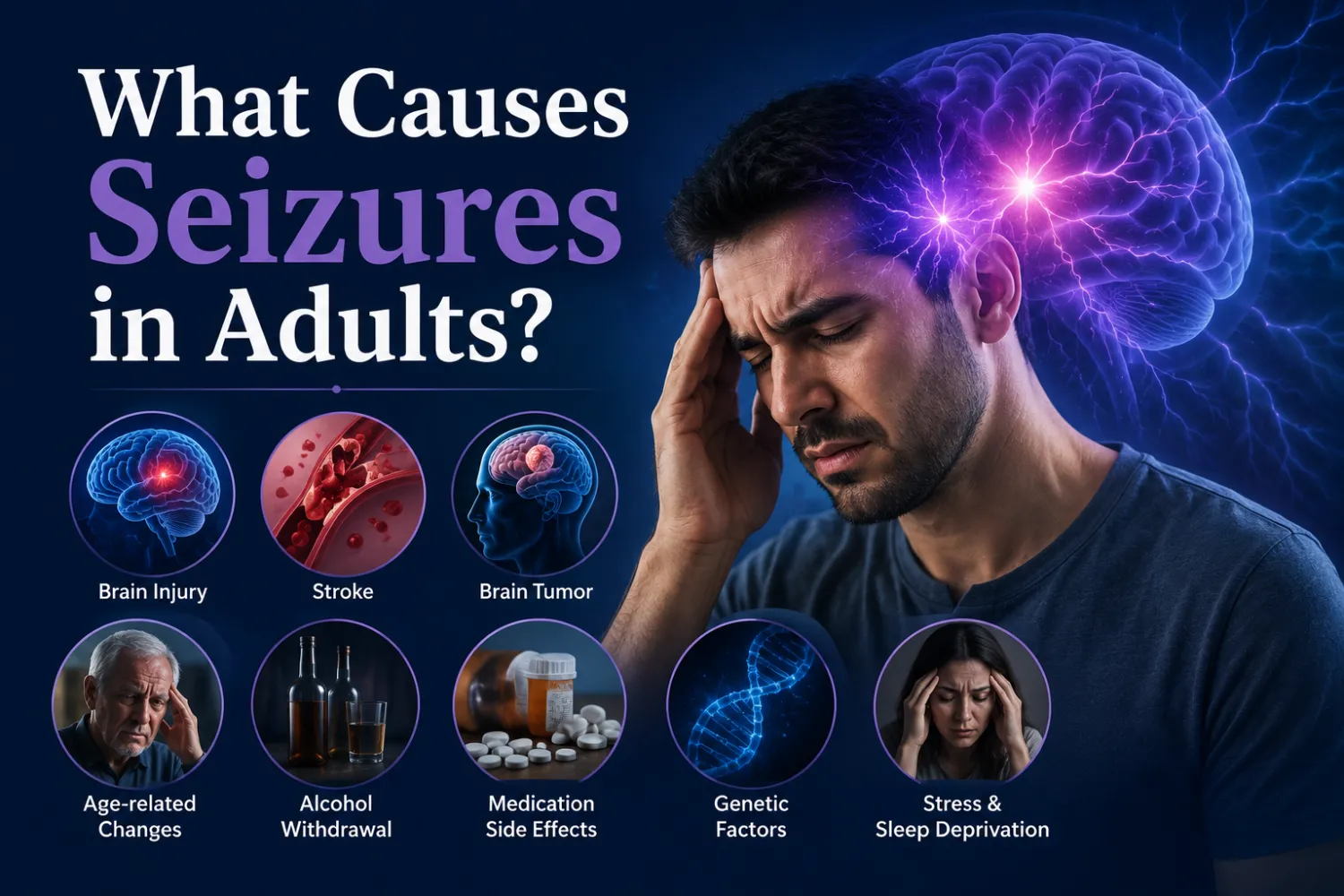
Unlike children, where seizures are often related to genetic or developmental factors, adult-onset seizures usually have an identifiable underlying cause. The major categories include:
- Stroke and Cerebrovascular Disease
- Stroke is one of the most common causes of new-onset seizures in adults, particularly those over 60. Both ischemic strokes (caused by blocked blood vessels) and hemorrhagic strokes (caused by bleeding) can damage brain tissue and create an irritable focus that triggers seizures, sometimes immediately and sometimes months or years later.
- Brain Tumors
- Both benign and malignant brain tumors can cause seizures by irritating surrounding brain tissue or increasing pressure within the skull. A new seizure in an adult, especially when accompanied by headache, personality changes, or focal weakness, warrants urgent brain imaging to rule out a tumor.
- Head Trauma
- Traumatic brain injury — from a fall, road traffic accident, or sports injury — can cause seizures either immediately after the injury or as a delayed complication months to years later (post-traumatic epilepsy). The risk is higher with more severe injuries involving bleeding or skull fracture.
- Infections of the Brain
- Encephalitis (inflammation of the brain) and meningitis (inflammation of the membranes surrounding the brain) caused by viral, bacterial, or parasitic infections can trigger seizures. In India, neurocysticercosis (a parasitic brain infection from tapeworm larvae) remains a significant and treatable cause of adult-onset seizures.
- Alcohol Use and Withdrawal
- Both heavy alcohol consumption and sudden alcohol withdrawal are well-recognized triggers for seizures. Alcohol withdrawal seizures typically occur 6 to 48 hours after the last drink in people with a history of heavy, prolonged alcohol use.
- Metabolic and Electrolyte Imbalances
- Abnormal levels of sodium, calcium, glucose (both very high and very low blood sugar), or kidney and liver dysfunction can disturb the brain’s electrical stability and provoke seizures. These metabolic causes are often reversible once the underlying imbalance is corrected.
- Drug Use and Medication Effects
- Certain recreational drugs (cocaine, amphetamines) and the misuse or sudden withdrawal of certain prescription medications (particularly benzodiazepines and certain sleep medications) can trigger seizures. Some antibiotics and other medications can also lower the seizure threshold in susceptible individuals.
- Sleep Deprivation
- Severe, prolonged sleep deprivation can act as a trigger for seizures, particularly in individuals who already have an underlying predisposition to epilepsy.
- Genetic and Idiopathic Epilepsy
- Some adults have an underlying genetic predisposition to epilepsy that may not manifest until later in life. In a significant proportion of cases, despite thorough evaluation, no specific cause is identified — this is termed idiopathic or cryptogenic epilepsy.
- Autoimmune and Inflammatory Conditions
- Certain autoimmune conditions cause the body’s immune system to attack brain tissue (autoimmune encephalitis), resulting in seizures along with cognitive and behavioral changes. These conditions are increasingly recognized and, importantly, often respond to immunotherapy.
How Are Seizures Diagnosed?
When an adult presents with a new seizure, Dr. Bahrani conducts a comprehensive evaluation that typically includes:
- Detailed history: A thorough account of the event from the patient and any witnesses is invaluable, including what happened before, during, and after the seizure.
- Neurological examination: To check for any focal deficits that might point to a structural brain problem.
- Blood tests: To check glucose, electrolytes, kidney and liver function, and screen for infections or toxins.
- Electroencephalogram (EEG): Records the brain’s electrical activity and can help identify abnormal patterns associated with seizure activity.
- Brain MRI: Provides detailed imaging to detect structural causes such as tumors, strokes, scarring, or malformations.
- Lumbar puncture: In select cases, to check for infection or inflammation if encephalitis is suspected.
Treatment Approach
Treatment depends entirely on the underlying cause. If a reversible metabolic abnormality is identified, correcting it may be sufficient. If a structural cause like a tumor is found, treatment is directed at that specific condition.
For patients diagnosed with epilepsy, anti-seizure medications (also called anti-epileptic drugs) are the mainstay of treatment. These medications are highly effective, with up to 70% of patients achieving complete seizure control with appropriate medication. The choice of medication depends on seizure type, patient age, other health conditions, and potential side effects.
Lifestyle modifications — including adequate sleep, avoiding excessive alcohol, managing stress, and medication adherence — play a crucial supporting role in seizure control.
When to Seek Immediate Medical Care
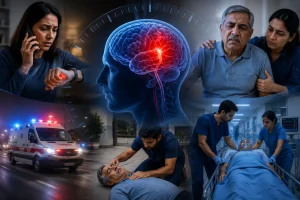
Call emergency services immediately if: • This is the person’s first-ever seizure • A seizure lasts longer than 5 minutes • The person does not regain consciousness between repeated seizures • The person is injured, pregnant, or has diabetes • The seizure occurs in water
Even after a single seizure that resolves on its own, prompt evaluation by a neurologist is essential to identify the cause and determine the risk of recurrence.
Conclusion
A new seizure in adulthood is never something to ignore, as it can be the first sign of an underlying — and sometimes serious but treatable — medical condition. With the right diagnostic workup and treatment plan, most adults with seizures go on to lead full, normal lives. If you or a loved one in Faridabad or Delhi NCR has experienced a seizure, prompt evaluation by an experienced neurologist is the most important next step.
📅 Book Your Appointment with Dr. (Prof.) Kunal Bahrani
Consult Dr. (Prof.) Kunal Bahrani – Leading Neurologist in Faridabad, Delhi NCR
Yatharth Super Speciality Hospital, Sector 20, Faridabad
Plot No 9, Sector-20, Krishna Nagar, New Industrial Township, Faridabad, Haryana 121007
Timing: Mon–Sat | 12:00 PM – 5:00 PM
Phone: +91 8527841220
Yatharth Super Speciality Hospital, Sector 88, Faridabad
RPS City, Sector 88, Faridabad, Haryana 121014
Timing: Mon–Sat | 10:00 AM – 12:00 PM
Phone: +91 8130048652
Mediclub Clinic
House No. 857, Ground Floor, Sector 21C, Faridabad, Haryana 121001
Timing: Mon–Sat | 5:30 PM – 7:30 PM
Phone: +91 8527841220
Email: drkunalbahrani@gmail.com